Is Now the Right Time to Invest? The Truth About Timing the Market
It is the question that comes up at almost every family barbecue, dinner party, or quick chat with friends. Someone leans in and asks, “So, is now the right time to invest?” followed quickly by, “Or should I wait for prices to drop a little bit more?”
It sounds like a smart question. After all, nobody wants to buy something today only to see it go on sale tomorrow. But when it comes to the stock market, waiting for the perfect moment is one of the most dangerous games you can play.
The truth is, both of those questions are incredibly difficult to answer—even for professionals who stare at charts all day.
If you have been sitting on the sidelines, clutching your cash and waiting for a sign, this guide is for you. We are going to look at why “time in the market” beats “timing the market,” how to protect your money from inflation, and the smart ways to get started without losing sleep.
The Myth of the Perfect Moment
Let’s be honest: we all want to buy at the absolute bottom (when stocks are cheap) and sell at the absolute top (when they are expensive). That is the dream. But in reality, hitting that bullseye is almost impossible.
The stock market moves up and down every single day. Sometimes it moves because of big economic news, and sometimes it moves for reasons that don’t seem to make any sense at all. Because these movements are so unpredictable, trying to guess the best entry point usually leads to one thing: procrastination.
While you are waiting for the “right time,” the market might be having its best days. Historical data paints a very clear picture here. If you look at the UK stock market between 2000 and 2021, missing just the best 10 days of performance would have cost investors thousands of pounds in returns.
Think about that. Over twenty years of trading, if you were sitting in cash for just ten specific days, your profits would be significantly lower. Investing is about playing the long game. It isn't about what happens today, tomorrow, or next week. It is about what happens over the next five to ten years.
The Hidden Danger of Playing it Safe with Cash
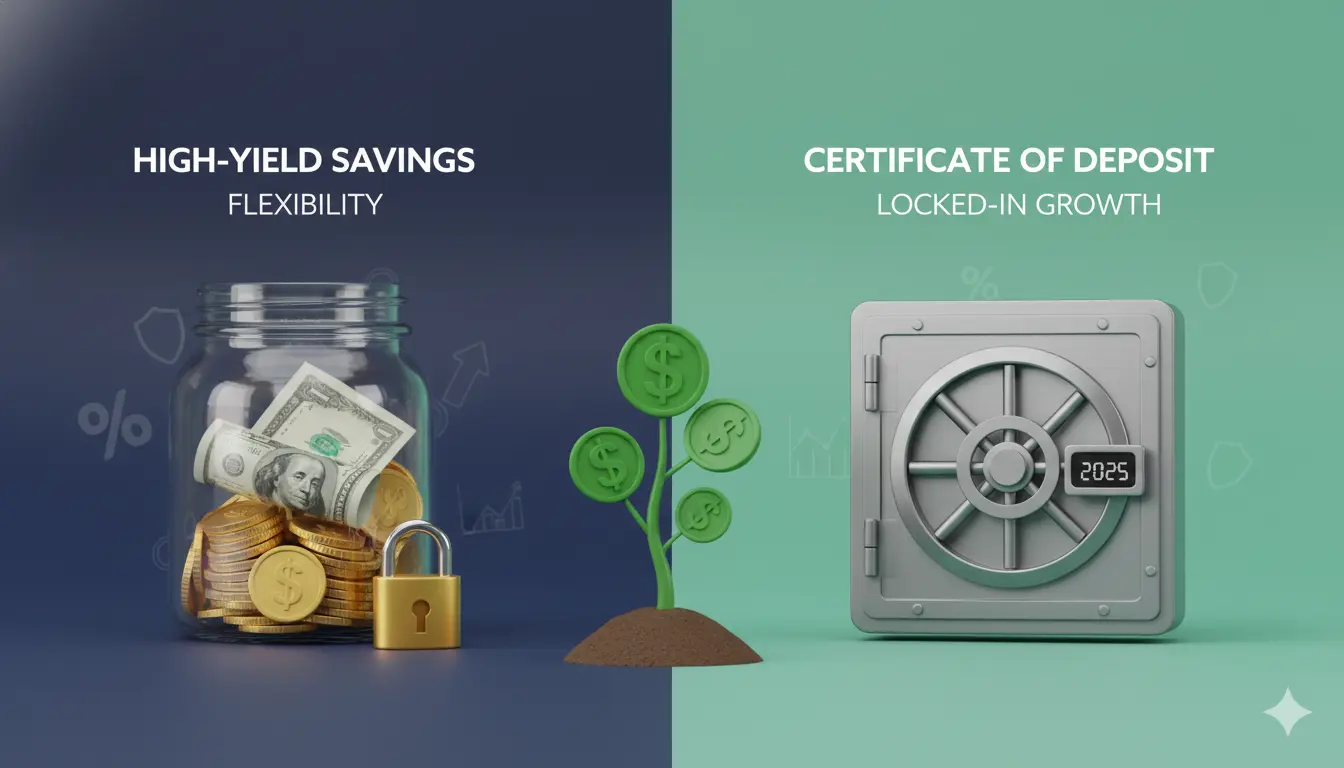
When the world feels uncertain, keeping your money in cash feels safe. It’s sitting right there in your bank account. The number doesn’t jump up and down like a stock chart does.
Technically, your cash is protected. But it isn't risk-free. There is a silent thief called inflation.
Inflation is the rate at which the cost of everyday things—like bread, petrol, and electricity—goes up. If a loaf of bread costs £1.00 today and £1.10 next year, your money has lost “buying power.”
We are currently living in a world where interest rates on savings accounts are often lower than the rate of inflation. This means that while the number in your bank account might stay the same (or grow slightly), the amount of stuff you can actually buy with that money is going down.
Over the long term, investing in the stock market has generally provided better returns than cash. Investing is one of the few ways to grow your money fast enough to beat inflation and keep your buying power intact.
The Checklist: Are You Actually Ready?
Before you rush to open an investment account, you need to make sure you are standing on solid ground. Investing is for money you want to grow for the future, not money you need to pay rent next month.
Here is a simple rule of thumb on how much cash you should keep safe before you invest a single penny:
- The Emergency Fund: If you are working, experts suggest keeping three to six months’ worth of essential expenses in an easy-access savings account. This is your safety net.
- For Retirees: If you are retired, that safety net should be bigger—usually one to three years’ worth of expenses.
- The Operational Buffer: It is also smart to keep a little cash inside your investment account to pay for fees and charges so you don't have to sell shares to pay the bills.
Once you have that emergency cash set aside, you need to look at the money that is left over. This brings us to the Five-Year Rule.
If you need the money within the next five years (for a wedding, a house deposit, or a new car), do not invest it. Keep it in savings. The stock market is volatile. It goes up and down. You need a timeline of at least five years to smooth out those bumps. If you invest money you need next year, and the market crashes tomorrow, you might be forced to sell at a loss. Giving yourself five years allows you to ride out the storm.
How to Invest: Lump Sum vs. The Drip-Feed Method
Let’s say you have passed the checklist. You have your emergency fund, and you have some spare cash ready to work for the long term. You might still be nervous. "What if I invest today and the market crashes tomorrow?"
This is a very common fear. The solution is a strategy called Pound Cost Averaging.
Instead of throwing all your money into the market at once (a lump sum), you "drip-feed" it in. For example, you might invest £100 or £200 every month.
Here is why this works:
- When the market is down, prices are cheaper. Your £100 buys more shares.
- When the market is up, prices are expensive. Your £100 buys fewer shares.
Over the course of a year, the price you pay averages out. You don't have to worry about buying at the peak because you are buying a little bit all the time. This takes the emotion out of investing. It also helps you build a habit. Many investment platforms let you start with as little as £25 a month.
However, it is worth noting the flip side: if the market goes straight up, you might make slightly less profit than if you had invested everything at the start. But for many people, the peace of mind is worth it.
Picking What to Buy: Funds vs. Shares
So, you have your money ready. What do you actually buy?
You have two main choices: picking individual company shares or buying funds.
Individual Shares: This is like walking into a supermarket and trying to pick the one apple that will taste the best in ten years. It requires hours of research. You have to read financial reports, understand the business models, and watch the news like a hawk. It is high effort, and if that one company fails, you lose money.
Funds: This is the option most experts recommend for the average investor. A fund is like buying a fruit basket. You pool your money with thousands of other investors, and a professional manager uses that massive pile of cash to buy hundreds or thousands of different companies.
This gives you instant diversification. Diversification is just a fancy word for "not putting all your eggs in one basket." If one company in the fund goes bust, it doesn't matter much because you own 499 others that are doing fine.
Here are two examples of funds to help you understand how they differ:
1. The "Growth" Tracker (e.g., Legal & General International Index)
This type of fund is a "tracker." It doesn't try to outsmart the market; it just tries to copy it. It tracks an index (a list of companies) from around the world.
- What it holds: Thousands of companies, heavily focused on big US tech firms and established global businesses.
- The Goal: To grow your money over the long term by following the global economy.
- Who it’s for: Investors who want a simple, low-cost way to get global exposure and are willing to accept the ups and downs of the stock market.
2. The "Defensive" Fund (e.g., Troy Trojan)
This is a "Total Return" fund. The goal here isn't just to make money; it's to make sure you don't lose it.
- What it holds: A mix of everything. It owns shares in big companies, but it also owns Gold, Cash, and Bonds (loans to governments).
- The Goal: Stability. When the stock market crashes, the Gold and Cash parts of the fund help cushion the blow.
- Who it’s for: Conservative investors who are worried about inflation and market crashes and want a smoother ride, even if it means growing a bit slower than the aggressive funds.
Smart Tax Moves: The ISA
If you are investing in the UK, you have a secret weapon: the ISA (Individual Savings Account). Nobody likes paying taxes, and investing can generate three types of them:
- Capital Gains Tax: Tax on the profit when you sell.
- Dividend Tax: Tax on the payouts companies give to shareholders.
- Income Tax: Tax on interest.
An ISA is a "wrapper" that protects your money from the taxman. Currently, you can put up to £20,000 each tax year into a Stocks and Shares ISA. Any money you make inside that wrapper—whether it’s £100 or £100,000—is yours to keep, tax-free. Whatever strategy you use, maximizing your ISA allowance should usually be your first step.
The Mental Game: Don't Crystallise a Loss
Once you are invested, the hardest part begins: doing nothing.
There will be times when the news is scary. The market will drop. You will log into your account and see a red number—maybe your £10,000 is now worth £9,000.
This is called a "paper loss." You haven't actually lost that £1,000 yet. The value has just dipped. You only lose the money if you hit the "sell" button. That is called crystallising a loss.
This is why the emergency fund is so important. If you have cash in the bank for emergencies, you won't be forced to sell your investments when they are down. You can afford to wait. History shows that markets tend to recover and climb over time. By panicking and selling, you lock in your failure. By waiting, you give yourself a chance to recover.
Conclusion: The Best Time is...
So, let’s go back to the original question: "Is now the right time to invest?" If you are looking for a guarantee that the market will go up tomorrow, the answer is no. Nobody can give you that. But if you are asking if it is a good time to start building wealth for your future, the answer is likely yes—provided you follow the rules.
- Do you have your emergency cash?
- Can you leave the money alone for five years?
- Are you ready to diversify using funds?
If you can answer yes to those questions, then waiting for the "perfect" moment is just holding you back. The longer your money is in the market, the more time it has to benefit from compound returns—where your profits start earning their own profits. Don't worry about what the market is doing today. Focus on where you want to be in ten years. The best time to start investing was twenty years ago. The second best time is today.
Don't worry about what the market is doing today. Focus on where you want to be in ten years. The best time to start investing was twenty years ago. The second best time is today.